
Korea's Used-Car Export Boom, 2023–2026: The Numbers Behind the Trend
Published Jul 5, 2026 · Updated Jul 16, 2026 · 4 min read
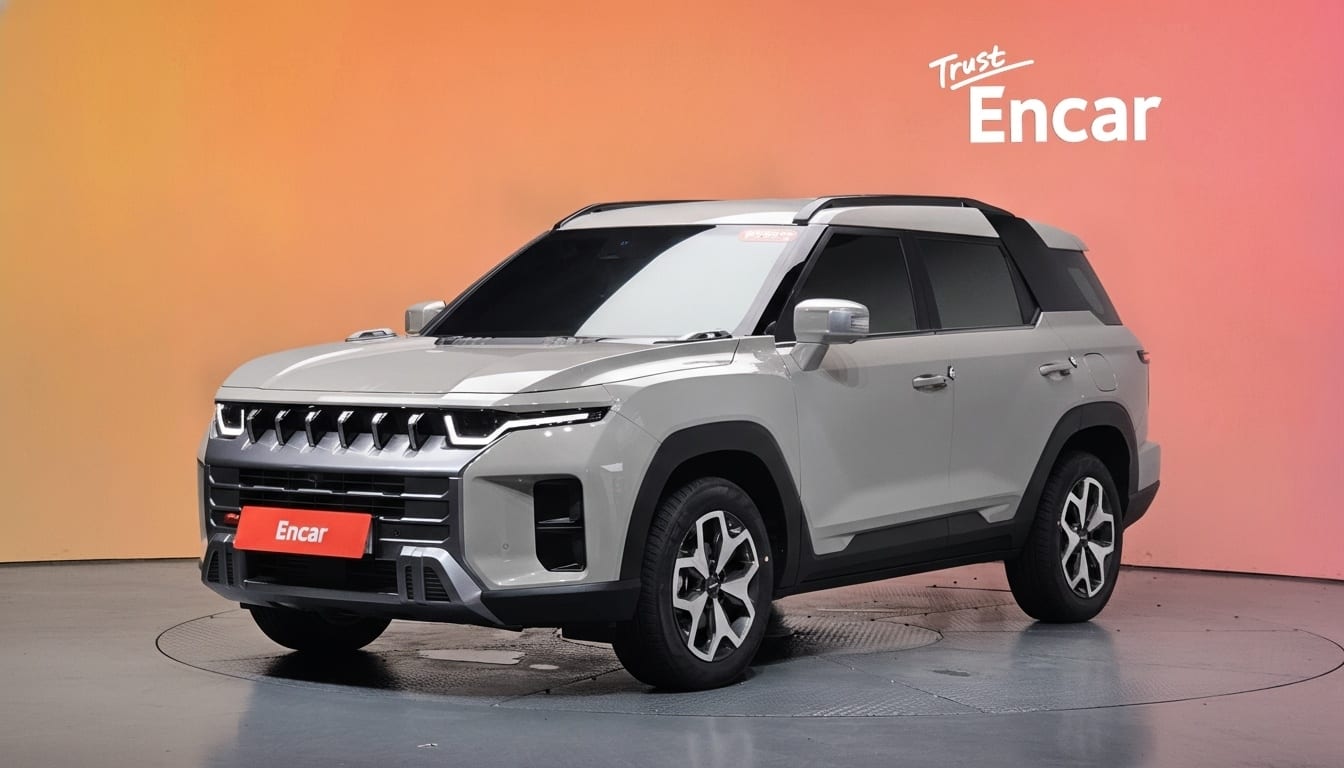
Illustrative opening - a composite scenario, not a real named buyer or transaction.
Daniyar had read three different blog posts claiming three different numbers for how big Korea's used-car export trade actually was, and none of them cited a source he could check. He wasn't trying to write a research paper - he just wanted one page with the real, dated numbers so he could stop guessing whether the trend he kept hearing about was actually as big as people said.
Here's that page, with every figure dated and sourced.
Direct answer
Korea exported an estimated ~639,000 used vehicles in 2023, up roughly +36% versus 2021, and used-car export value reached approximately $8.4B in the Jan–Nov 2024 period, up roughly +82.6% year-on-year. The volume concentrates heavily in markets needing left-hand-drive vehicles - Central Asia and Russia, the Gulf/Arab world, the Balkans (Albania in particular), and Spanish-speaking Latin America - though a meaningful share of headline volume in some corridors is re-export through hub countries rather than local end-consumer demand. Two regulatory shocks in 2025–26 (a Russian recycling fee and an EAEU re-export crackdown) are reshaping the top of the volume chart.
Key facts
Updated July 2026- ~639,000 used vehicles exported in 2023, up +36% versus 2021. (Sourced: KED Global/Statista reporting on Korea vehicle export trade data.)
- Export value ~$8.4B, Jan–Nov 2024, up +82.6% year-on-year. (Same sourcing basis.)
- Albania: Korea became the #1 used-car import source in 2024, ~18,800 units (~19% share, +124% YoY). (Sourced: Euronews Albania, Monitor.al.)
- Russia: introduced a vehicle recycling fee of over $10,000/unit, effective December 2025. (Sourced: Nichibo reporting.)
- Kazakhstan/Kyrgyzstan: the EAEU's 0%-tariff re-export loophole through these countries (largely Russia-bound traffic) closed around January 2026. (Sourced: Eurasianet, RFE/RL reporting.)
- All figures above are ordinal-solid per reputable secondary trade reporting; exact values are estimates and should be re-confirmed against primary Korea Customs/KAMA data for any decision requiring precision.
Where the volume actually goes - and the re-export distortion
A meaningful share of the largest reported destination volumes is re-export through hub countries, not local end-consumer demand - Kyrgyzstan and Kazakhstan volumes are substantially Russia-bound; UAE volume includes a genuine re-export flow into Africa and Central Asia; Jordan's Zarqa Free Zone volume flows onward largely to Iraq; Chile's Iquique/ZOFRI volume is a transshipment point for Bolivia, Paraguay, and Peru. This matters for reading any headline "top destination" ranking honestly - a country topping the volume chart isn't necessarily where the cars end up being driven.
The 2025–26 regulatory shocks reshaping the picture
Two recent changes are significant enough to change where this trend goes next. Russia's new recycling fee, over $10,000 per unit as of December 2025, substantially changes the economics of a direct import into that market. Separately, the EAEU's closure (around January 2026) of a 0%-tariff re-export loophole through Kazakhstan and Kyrgyzstan directly hits the highest-volume corridor in the current data, since much of that volume was transiting toward Russia under the now-closed loophole. Both changes mean the historically largest corridor by volume is also, right now, the most volatile - durable end-consumer markets like Albania, the Dominican Republic, and the UAE look comparatively more stable going into the rest of 2026.
FAQ
Is Korea's used-car export trade still growing in 2026?
The trend through 2023–2024 shows strong growth (see figures above); the 2025–26 regulatory changes specifically affect the Russia/Central-Asia corridor rather than the overall trend, which continues to be driven by durable end-consumer markets. Confirm the latest published figures for the most current picture.
Why does Kazakhstan or Kyrgyzstan show up so high in export volume rankings if the local market is small?
Because most of that volume is re-export, largely Russia-bound, rather than local consumption - a genuinely important distinction when reading any "top destination" list.
Which market is currently the most stable, durable destination?
Albania stands out as a cleanly local, end-consumer-driven market with strong, durable growth and no comparable recent regulatory shock, per the sourcing above.
Where can I find the primary trade data behind these figures?
This page cites secondary reporting (KED Global, Statista, and the country-specific sources listed above); for primary-source verification, Korea Customs Service and KAMA (Korea Automobile Manufacturers Association) publish underlying trade data.
Want to see how this trend shows up in real, current inventory? Browse listings by destination market or message us on WhatsApp.
See it for yourself, on a real car
Every listing on our site includes Korea's official inspection record, reproduced unaltered.
Browse current inventoryRelated guides
Why South Korea Is One of the World's Best Sources for Used Cars
Why Korea has become one of the world's largest used-car export sources - manufacturing scale, inspection culture, and real 2023–24 trade data.
4 min read · Jul 2, 2026
Vehicle Age Limits for Used-Car Imports: A Country-by-Country Cheat Sheet (2026)
A country-by-country cheat sheet of used-car import age limits for our key export markets, dated and sourced - always confirm with local customs.
4 min read · Jul 10, 2026

How to Import a Used Car from Korea to Albania (2026 Guide)
Korea is Albania's #1 used-car import source as of 2024. Here's the real Durrës RoRo route, age/emissions rules, and what to check before you buy.
5 min read · Jul 11, 2026